

Autonomous driving is entering a different phase. The challenge is no longer about adding more sensors or writing better rules, but about teaching machines something humans already have long before they ever sit behind a wheel: an understanding of how the physical world behaves.
Humans do not become competent drivers simply by memorizing traffic laws. We arrive with a lifetime of prior knowledge about motion, cause and effect, danger, and social behavior. We understand what happens when two objects collide, how speed changes outcomes, and why a pedestrian might hesitate before crossing. Driving works for us because it builds on that intuition, but machines lack this foundation. They have to learn it from data, and that reality is reshaping how AI training data for autonomous driving is being built.What is changing now is not the hardware, but the way machines learn. Instead of trying to program every possible situation, the industry is finally accepting a simpler idea: driving is a learned behavior. Video is becoming the primary learning signal, and a new pipeline is emerging in which Visual Language Models, World Foundation Models (WFMs), Vision-Language-Action (VLA) models, and End-to-End (E2E) driving systems work together to treat driving as something learned from experience.
For years, the industry focused on engineering architecture. Teams built perception modules, mapping systems, prediction layers, planners, and control stacks, each optimized and debugged separately. That approach brought enormous progress, but it also exposed a deeper limitation. The real world is messy, and it does not fit neatly into modular assumptions. A vehicle can perform well in common situations and still fail in rare edge cases, and these are the ones that matter most for safety. These events do not show up frequently on the road, yet autonomy must handle them consistently.
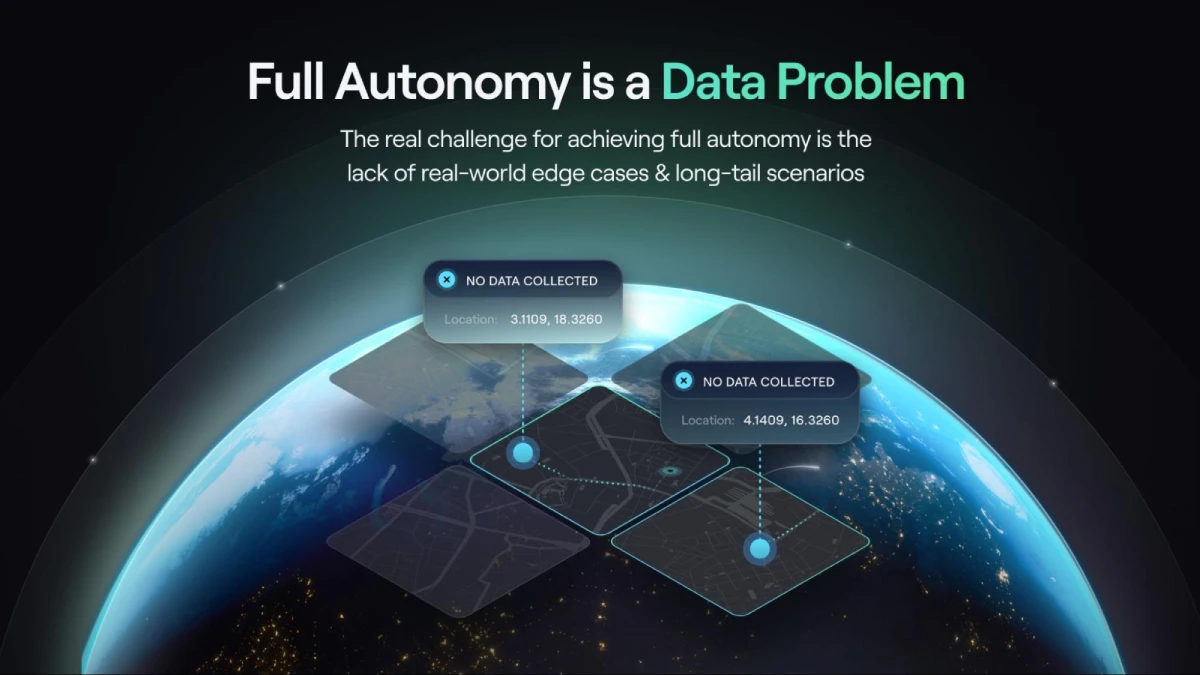
Elon Musk once described the hardest part of autonomy not as getting it to “sort of work,” but as closing the gap between that and being meaningfully safer than a human driver. Another clever rule does not solve that gap. It is solved by exposure to more reality. Investors such as Vinod Khosla have echoed the same idea from a different angle, arguing that World Foundation Models will be as important as Large Language Models (LLMs) because whoever controls the strongest AI training data loop will shape the next market.
The common thread is clear: autonomy is now a data problem, and whoever controls the long tail wins.
Visual Language Models sit at the intersection of machine vision and language understanding, and are often described as tools for searching images or answering questions about videos, but in the context of autonomy, their role is far more critical. Even when autonomous driving engineers get their hands on massive video archives, most of that footage is still unusable because it is hard to search, label, and organize. A VLM turns raw video and computer-vision outputs into something we can actually work with.
Imagine having millions of miles of footage stored across servers. Without structure, that footage is just storage cost. A VLM functions like an intelligent index for that archive. It links natural language queries to visual evidence across time, which means engineers can ask for “urban left turn in heavy rain at night” and retrieve relevant clips within seconds instead of weeks.
In practice, VLMs unlock three high-leverage workflows for autonomy teams:
Without VLMs, teams are guessing what data they are missing. With them, they can ask for the data directly.
World Models: Teaching AI While “Dreaming”
If VLMs make video searchable, world models add the missing capability: they learn how the environment itself changes over time. If large language models predict the next word in a sentence, world models predict the next moment in a scene. WFMs learn motion, physics, and interaction, modelling how events unfold as they do in the real world.
This is a fundamental unlock for autonomy because the hardest part of self-driving is learning what happens when reality becomes unusual. In the past, these edge cases had to be hand-built and inserted into simulators by engineers, but real-world driving contains rare interactions that are too expensive and impossible to generate at scale. WFMs changed the game because they absorb patterns from real footage and can generate new, physically coherent variations of those scenes.
World Foundation Models allow autonomous vehicle simulation systems to train in synthetic futures that are still grounded in reality. They can take a real driving clip, learn the structure of that environment, and then generate new variations: different timing, different lighting, different traffic density, different behaviors, while keeping the scene physically coherent.
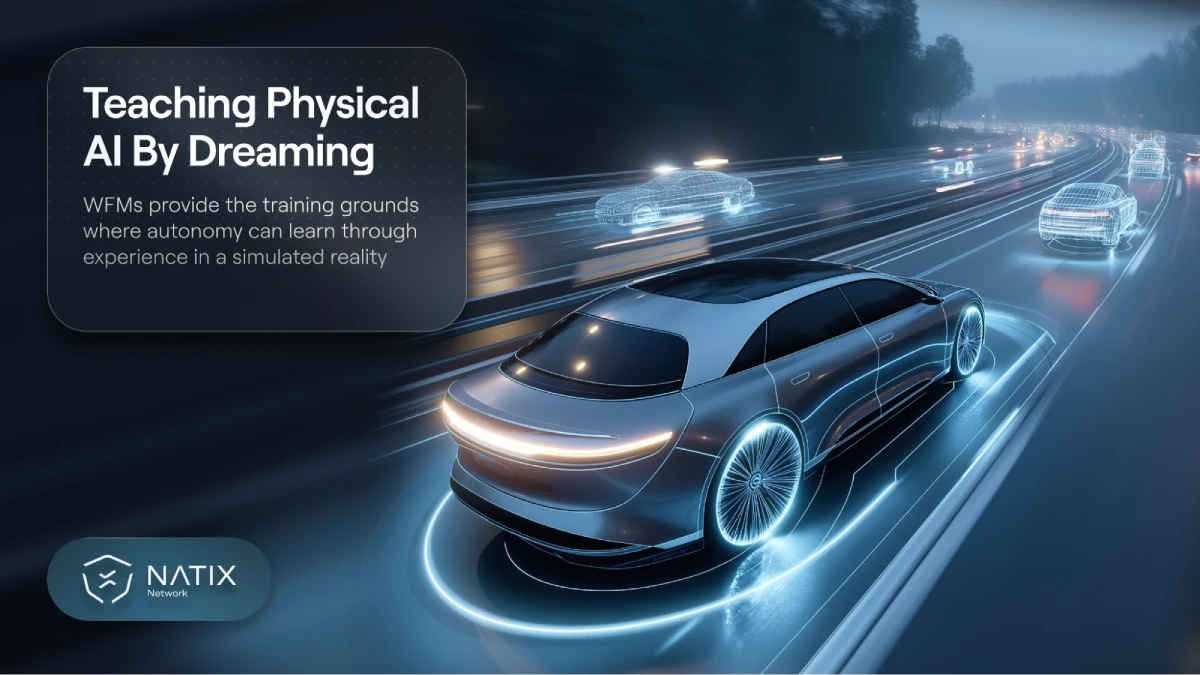
The key difference between World Foundation Models and traditional AI simulation is that traditional simulators are hand-authored. They are like movie sets: expensive to build, hard to scale, and limited by what the designer thought to include. World models are learned from data. They are closer to imagination. They can produce countless scenarios that no engineer explicitly scripted.
This is why the world model wave is being treated as the next major platform shift in Physical AI, and that’s why so many research groups and automotive companies are investing in this direction. It’s about turning static datasets into dynamic training grounds where autonomy can learn through experience without paying the cost of real-world collection for every scenario.
If Visual Language Models help machines understand what is happening now, and World Foundation Models can predict what will happen in the future, Vision-Language-Action models answer the next question: what should the system do now?
A VLA model takes visual input, often paired with an instruction or goal, and produces an action. In the case of autonomous driving, that action might be steering, braking, or accelerating. In robotics, it might be moving an arm or adjusting its grip.
Most VLA systems are built on top of pretrained Vision-Language Models. The model already understands objects, scenes, and language from large-scale image-text data. It knows what a pedestrian is, what a lane looks like, and what “turn left” means. What it has to learn next is how that understanding translates into movement.
To teach that, the model is trained on demonstrations. It sees what a human driver or operator did in a given situation and learns to replicate that behavior. Over time, it connects scene understanding with control decisions. You can think of it as adding the notion of movement to a brain that already understands the world.
Some VLA systems are trained as a single, tightly integrated policy that goes from perception directly to action. Others keep parts of the system separate, with perception, planning, and control still handled by distinct components. At a high level, though, they all serve the same purpose: turning perception and intent into motion.
This naturally leads to the broader shift happening in autonomous driving, where more and more of the stack is being trained as a unified system rather than as isolated modules. That broader shift is what people refer to as End-to-End (E2E) models.
Traditional autonomy stacks resemble industrial assembly lines. One module detects objects, another estimates motion, another predicts behavior, another plans, and another executes control. Each piece is engineered and tuned independently. This structure makes systems easier to inspect, but it also creates boundaries. When something goes wrong, it is not always obvious where the failure started.
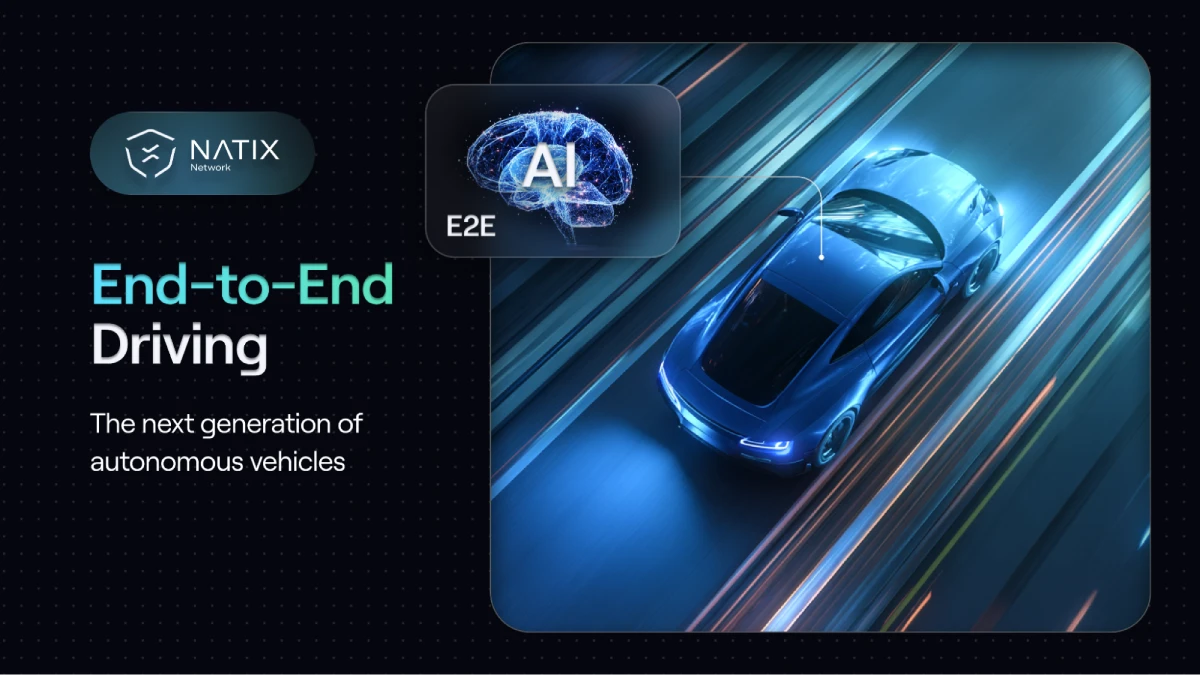
End-to-end (E2E) approaches reduce those boundaries. Instead of manually defining every intermediate step, an autonomous driving system learns to map multi-camera input directly to driving actions under a shared training objective. Perception and control are optimized together, rather than in isolation. The system is not told exactly how to represent the world internally. It learns the representations that best support safe driving.
A useful comparison is language translation. Early systems relied on dictionaries and handcrafted grammar rules, while modern systems learn meaning directly from examples and often outperform rule-based approaches because they absorb nuance from large datasets. E2E driving aims for the same kind of jump: less handcrafted logic, more learned competence. This does not mean E2E is “simpler.” In many ways, it is harder to train and harder to validate. But they have one major advantage: they scale with data. The more diverse the experience, the more capable the policy becomes.
This is where the pieces come together.
VLMs make it possible to find and structure rare scenarios inside massive video archives. World Foundation Models expand those rare moments into many controlled variations. VLA systems translate perception into action. End-to-end training ties it all together by allowing the driving policy to learn directly from that enriched experience.
Many modern VLA driving systems are implemented as end-to-end policies, where perception and control are trained jointly. However, the terms describe different things. VLA refers to what the system does, turning vision and intent into action. End-to-end refers to how tightly the system is trained, whether those components are optimized together or separated into modules.
What matters most is the direction of travel. The industry is moving away from hard-coded pipelines and toward policies that learn from large-scale, structured, and increasingly diverse video data.
The convergence of VLMs, WFMs, VLA models, and end-to-end systems is not accidental. It is happening because autonomy needs a feedback loop that scales.
Together, they create a learning cycle where models improve not just by driving more miles, but by learning from curated reality and simulated futures.
At the same time, multimodal AI systems for vision, language, and motion have matured enough to handle long sequences, multi-camera inputs, and temporal consistency. The technical pieces are finally aligning with the industry’s need for broader coverage and safer validation. The best teams are not just training better models, they build better pipelines for collecting, curating, and validating the data those models need. It’s about continuous exposure to reality and systematic learning from it.
If you zoom out, a new structure for autonomy emerges. It is less about stitching together carefully engineered modules and more about building layers of learning systems that feed each other. This stack is video-native. It treats driving as a learning problem, and it makes autonomy development more like training a system through experience than engineering a system through logic.
That is the deeper shift underway, and it is why video, more than any other input, is becoming the foundation of modern Physical AI.
As autonomy moves toward end-to-end learning and world models, one requirement becomes unavoidable: multi-camera, globally diverse, real-world video data.
World models cannot learn realistic dynamics from narrow viewpoints. VLA and end-to-end driving systems cannot generalize if trained only on ideal conditions. Weather, lighting, and regional traffic behavior act as multipliers of the long tail. A maneuver that is trivial in daylight can become an edge case in heavy rain, snow, or low visibility.
This is where the industry still falls short. Many datasets are front-facing, geographically narrow, or too small to cover the long tail. But the next generation of autonomy stacks will be trained on multi-camera data, because modern vehicles perceive the world in all directions, and their training data must reflect that.
NATIX’s multi-camera network is built around this requirement. It captures synchronized 360° driving footage across continents, weather conditions, and traffic cultures, creating the kind of real-world AI training data that WFMs, VLAs, and E2E autonomous driving systems need to generalize.
Combined with VLM-based extraction, real-world edge cases can be identified and structured at scale. Those edge cases can then seed World Foundation Models, which expand them into broader scenario variations for training, while the original multi-camera recordings remain critical for validation.
As the industry shifts toward multiview world modeling and policy learning at scale, the data advantage will increasingly belong to networks that can collect reality continuously and operationalize the long tail.
Autonomy is being rebuilt around video.
Visual Language Models make real-world footage searchable and usable. World Foundation Models expand rare scenarios into structured synthetic futures. Vision-Language-Action models translate perception into behavior, and end-to-end training binds the entire loop together.
This is the emerging foundation of Physical AI, and within that foundation, the quality, diversity, and structure of real-world multi-camera data ultimately determine how far autonomy can scale.


