

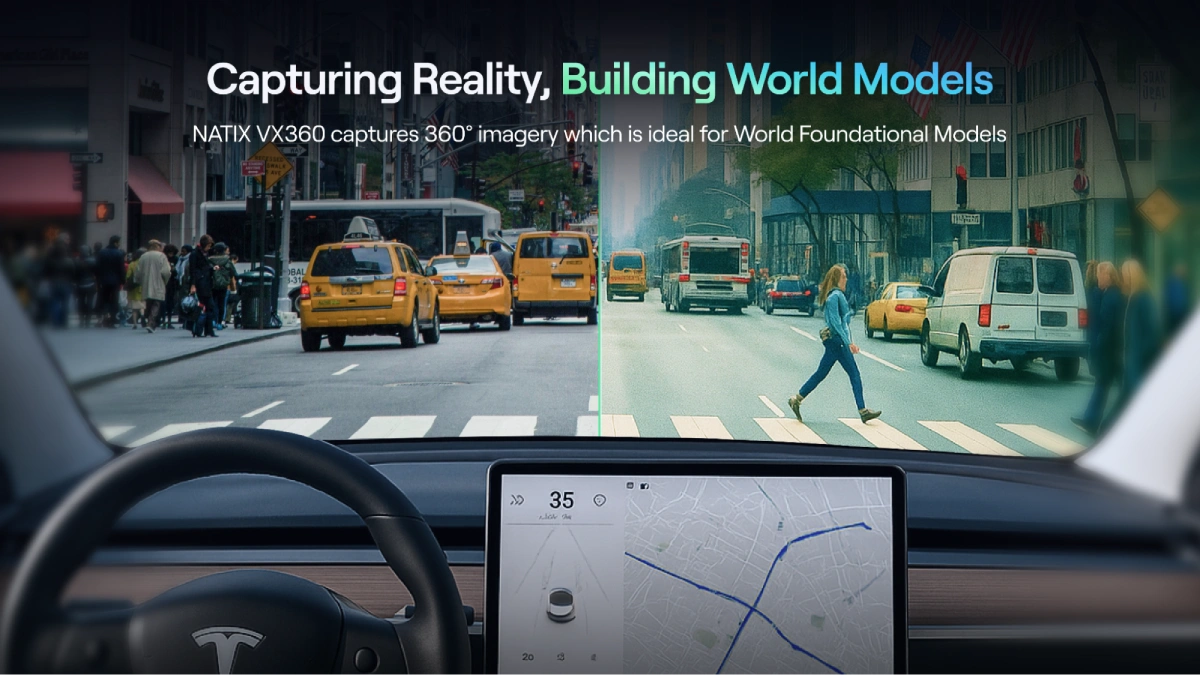
Imagine an autonomous car smoothly navigating through heavy rain in Tokyo, swiftly adjusting to a jaywalker darting across the street in Berlin, or safely handling icy roads in Colorado—all without extensive real-world data for training and testing. With traditional data collection methods, that wouldn’t be possible. Industry leaders, including Elon Musk, have highlighted the severe shortage of diverse and high-quality real-world data, stating, “We’ve now exhausted basically the cumulative sum of human knowledge… in AI training. ”
So, how can we still make it happen? The answer lies in revolutionary technology known as World Foundation Models (WFMs). Before we dive deeper, let's first clearly outline the three-stage process involved in developing autonomous driving systems:
A World Foundation Model is essentially an LLM for the physical world. If LLMs learn the structure of language, WFMs learn the structure of the world, able to predict how cars move, how pedestrians behave, how weather affects visibility, and the outcome in a simulation of the real world. WFMs are sophisticated generative AI systems capable of creating highly realistic virtual environments and scenarios, significantly enhancing the first two stages—training, testing, and validation.
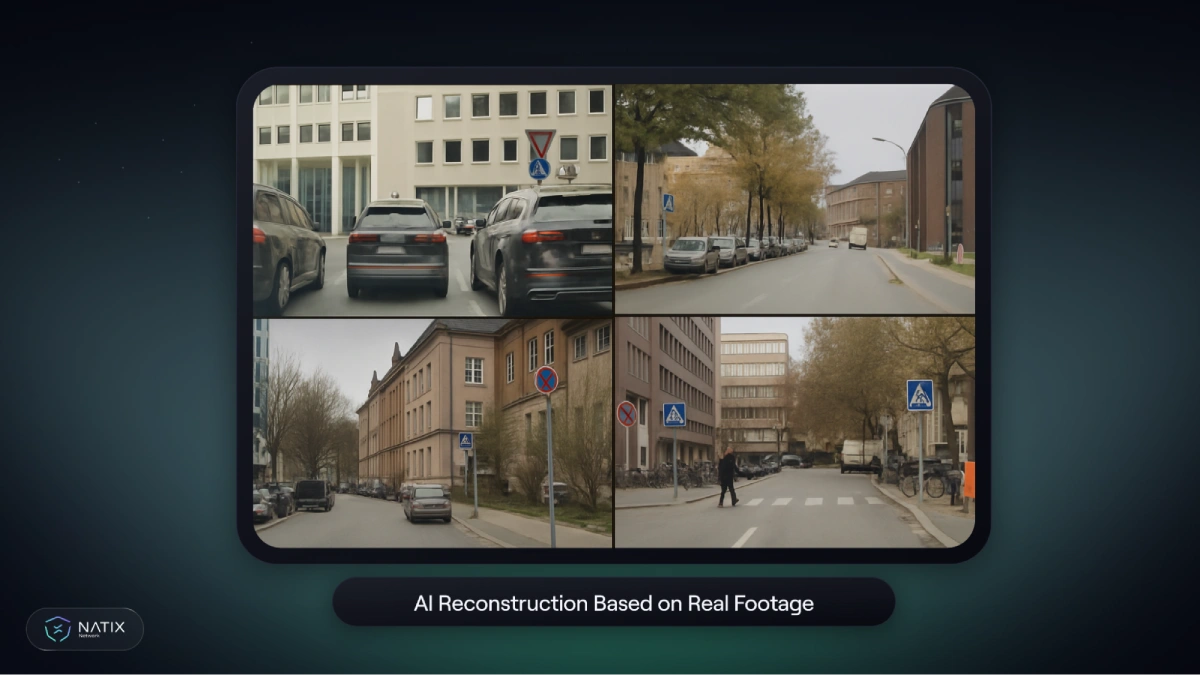
Think of it as AI hallucinating and creating 5000 hours of driving data in NYC, Berlin, Tokyo, including thousands of interesting scenarios (right turn, left turn, lane change) and Edge cases (jay walking, dangerous overtaking, etc.). This helps autonomous systems gain comprehensive exposure to various driving conditions, scenarios, and rare but critical situations without relying solely on real-world data collection. By building detailed simulations, WFMs significantly enhance the decision-making capabilities of autonomous systems, providing a safer, cost-effective, and highly reliable approach to the training, testing, and validation of Physical AI (autonomous vehicles and robots).
Gathering real-world driving data is incredibly costly, time-consuming, and often incomplete. Autonomous vehicles need exposure to numerous driving situations, including rare "edge cases" like sudden braking or unexpected pedestrian crossings. Capturing these rare events in real-world conditions is particularly challenging, as experts estimate they occur once in every 100 million miles of driving out in the real world. For example, collecting just 20,000 hours of actual driving data could cost millions and still miss many edge cases. Synthetic data from WFMs helps bridge this gap. Using Musk’s words again, “The only way to supplement [real-world data] is with synthetic data, where the AI creates [training data]. With synthetic data … [AI] will sort of grade itself and go through this process of self-learning.”
WFMs can easily generate hundreds of thousands of hours of synthetic data, covering general conditions, common scenarios (right turn, left turn, lane change, etc.), and rare edge cases from various global locations (Germany, Japan, USA), weather conditions (fog, rain, snow), and unique road configurations. For example, instead of relying exclusively on 20,000 hours of costly real-world video data, a WFM can generate 200,000 hours of diverse driving scenarios, including multiple jurisdictions and complex edge cases such as dangerous overtaking, kids running onto roads, sudden object fall, and vehicle flipping over. Some of these synthetic scenarios and edge cases can be used for training the autonomous vehicles, and some can be strategically reserved for rigorous testing and validation, significantly enhancing model performance while drastically cutting costs and time.
WFMs take input data—such as videos, images, and sensor readings—and use AI to create realistic synthetic scenarios. Leading examples include:
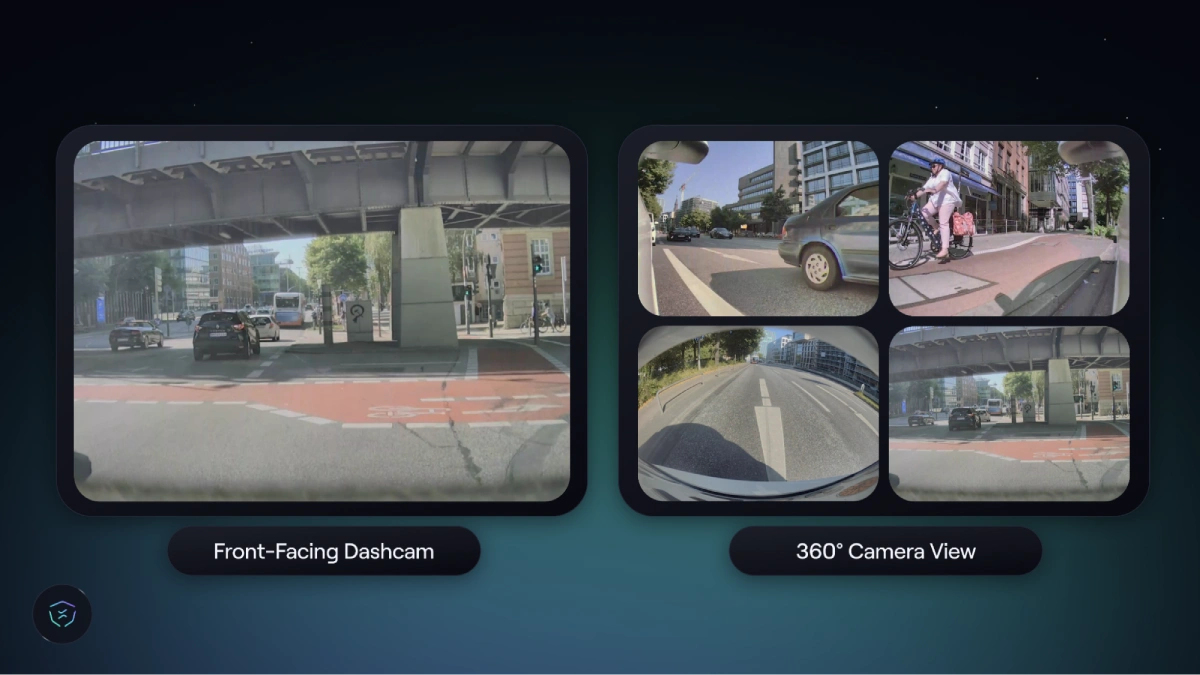
However, WFM models like Valeo and Comma.ai primarily use data from front-facing dashcams. This approach limits their effectiveness for comprehensive scenario generation because modern autonomous vehicles rely on multiple cameras positioned around the vehicle for complete 360° situational awareness. Without data from these multiple perspectives, the synthetic scenarios generated may miss critical interactions occurring outside the front camera’s view.
By offering a comprehensive 360° camera view, NATIX’s VX360 ensures that simulations reflect the reality modern autonomous vehicles face, capturing all elements surrounding the vehicle, including element trajectory and directions.
So far, we've discussed how synthetic data can play a big role in the training, testing, and validation of autonomous agents, and while synthetic data is extremely useful, relying exclusively on it presents significant challenges:
The core idea is that synthetic data is excellent for generating vast amounts of training data and testing scenarios efficiently. However, it cannot completely replace real-world data due to the unpredictable nature of real-world driving and the intricate nuances we encounter daily across different global regions. In a test environment, an AI model might believe it’s doing great because the test data is only as accurate as the synthetic training data, while in reality, it may fail performing a simple task simply because it has never taken into account a minor detail that we encounter in real-world driving.
To overcome these limitations, a combination of synthetic data and real-world data for both training and validation is the ultimate solution. Ideally, incorporating about 20%-30% of real-world data ensures the AI system experiences extensive variety (from synthetic data) and the critical real-world accuracy needed for reliable deployment. This real-world data is important for creating real-world scenarios, generated from real-world data inside a simulation environment. This approach of combining real-world data with synthetic data is crucial for ensuring autonomous systems perform safely and effectively under real-world conditions.
NATIX’s VX360 fundamentally transforms the data collection landscape by providing extensive, high-quality, and comprehensive real-world data essential for developing powerful WFMs. With just a few hundred devices deployed, VX360 has already captured over 80,000 hours of real-world driving data, surpassing the largest open-source dataset, Learning to Drive (L2D), operated by driving schools, exclusively in Germany, and offers just 5,000 hours collected over the span of three years.
Moreover, unlike conventional datasets that are typically restricted to front-facing cameras, NATIX’s VX360 captures the entire environment around the vehicle, ensuring no detail is missed. This complete 360° perspective is critical because modern autonomous vehicles rely heavily on multi-camera systems to interpret complex road scenarios accurately.
VX360 systematically categorizes its data, making it highly useful for WFMs and autonomous driving developers:
After launching the StreetVision Subnet on Bittensor, which ingests NATIX's real-world data streams and processes them to generate critical insights for Physical AI, NATIX can offer autonomous vehicle companies pre-classified scenarios and edge cases. Leveraging Bittensor's distributed AI and computational power to process massive datasets rapidly and efficiently, the value NATIX data brings to WFMs is not just a painkiller but a remedy to the lack of real-world driving footage. This further accelerates the deployment of sophisticated WFMs, facilitating quicker innovation and more reliable autonomous systems.
NATIX’s VX360 not only enriches training datasets but is pivotal for robust validation and testing. If an autonomous driving company's AI stack has been trained primarily on synthetic data, NATIX’s real-world datasets ensure thorough and realistic validation. This combination prevents common pitfalls associated with purely synthetic training, such as AI hallucinations or inadequate responses to unforeseen scenarios.
The integration of NATIX’s real-world data ensures a true end-to-end validation system, enabling autonomous vehicle developers and WFMs to iterate and refine their AI models rapidly. This approach significantly accelerates development cycles, reduces costs, and enhances the safety and reliability of autonomous driving technologies.
Ultimately, while we've primarily discussed autonomous vehicles, the principles and data provided by NATIX’s VX360 equally benefit robotic systems and other forms of Physical AI. By underpinning advanced WFMs with robust, real-world 360° data, NATIX positions itself as a foundational player in the broader Physical AI ecosystem, driving innovation forward at remarkable speed and scale.
World Foundation Models are set to be the next major advancement in Physical AI, fundamentally transforming how autonomous vehicles and robots are trained, validated, and deployed. By enabling extensive simulation of real-world scenarios and reducing dependency on costly physical testing, WFMs not only accelerate AD development but also dramatically enhance safety and reliability.
NATIX’s VX360 provides essential, high-quality data critical for developing and refining World Foundation Models, significantly impacting autonomous driving technology. By offering real-world data vital for both training synthetic models and validating their accuracy, NATIX ensures robust and reliable AI performance. Training AI models on synthetic data reduces costs significantly, but testing and validation must be conducted using real-world data to avoid potential model hallucination. NATIX’s comprehensive data thus plays a pivotal dual role: fueling advanced scenario generation and reliably validating AI models, ensuring safer and highly adaptable autonomous systems prepared for real-world deployment.


