

NATIXIANs, summer has a way of slowing things down, and August was no exception. The announcements were fewer, the pace was quieter, but that is exactly the kind of month where the groundwork gets laid for what comes next. We have some big things lined up over the coming months, so let's take a look at what August did bring.
The multi-camera data engine kept running all through August, and it is worth pausing to consider just how far it has come. We have now collected over 196K hours of multi-camera footage, a number that keeps compounding as the network captures the world from every angle, not just the road ahead. That is the raw material that powers everything downstream, from World Foundation Models to spatial intelligence, and it only gets more valuable as it grows.
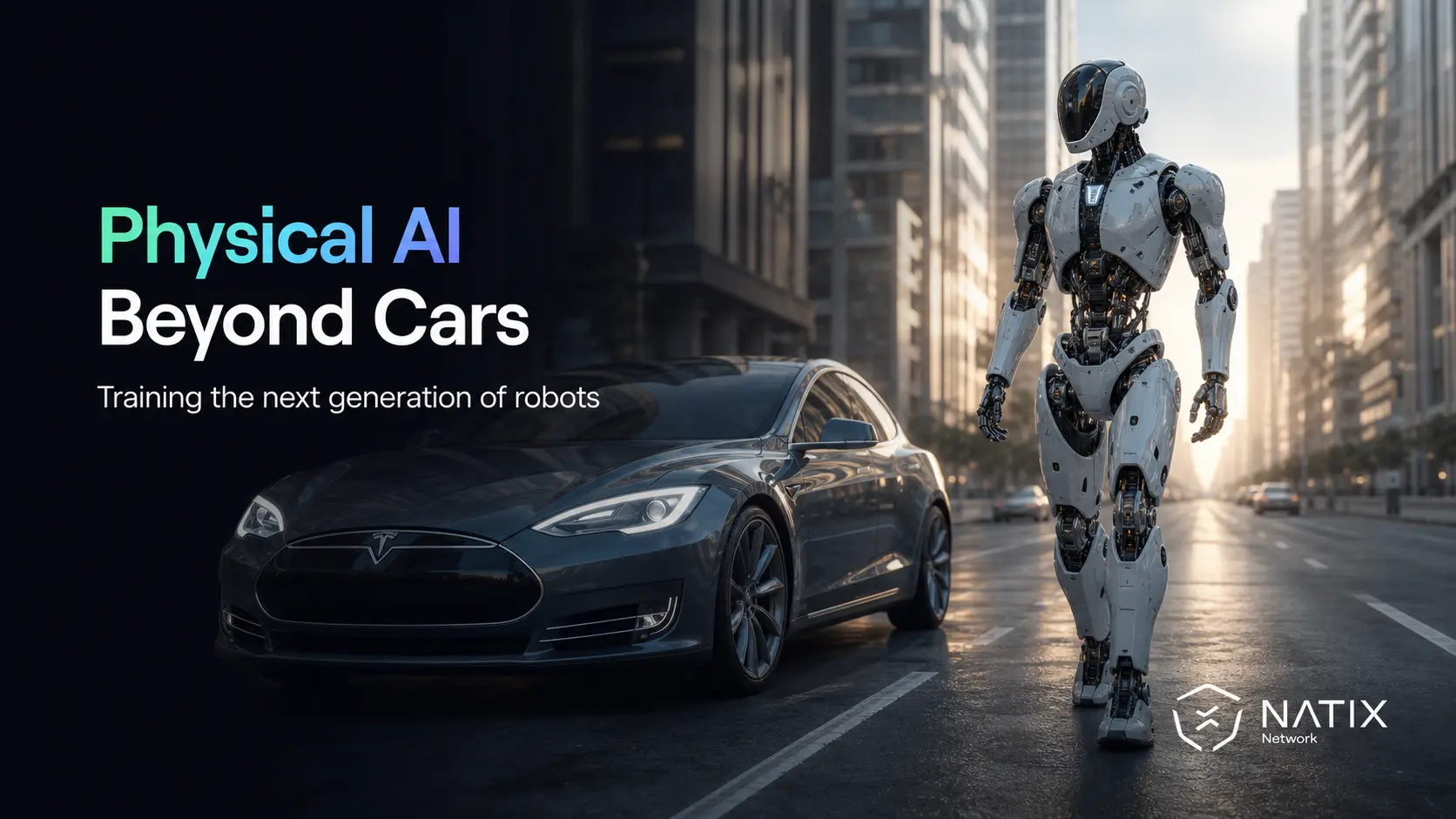
Robotics has hit the same wall that autonomous driving hit years ago: the bottleneck was never actuators or compute, it was data. In August we published a piece making the case that autonomous driving has, almost by accident, built the largest training corpus of the physical world that exists today, and that this corpus is now what trains the next generation of robots.
Humanoids stepping into homes and hospitals, delivery robots crossing public streets, general-purpose agents learning to manipulate objects they have never seen: all of it depends on the same physical intuition that driving data has been capturing at scale for a decade. Once that footage is structured through World Foundation Models and Vision-Language Models, the line between driving data and robotics data starts to blur. A clip of a near-miss can train a driving policy on Monday and a humanoid avoidance model on Tuesday. This is exactly the kind of Physical AI positioning we have been building toward: a data layer designed to serve many models across many domains, including ones that do not exist yet.
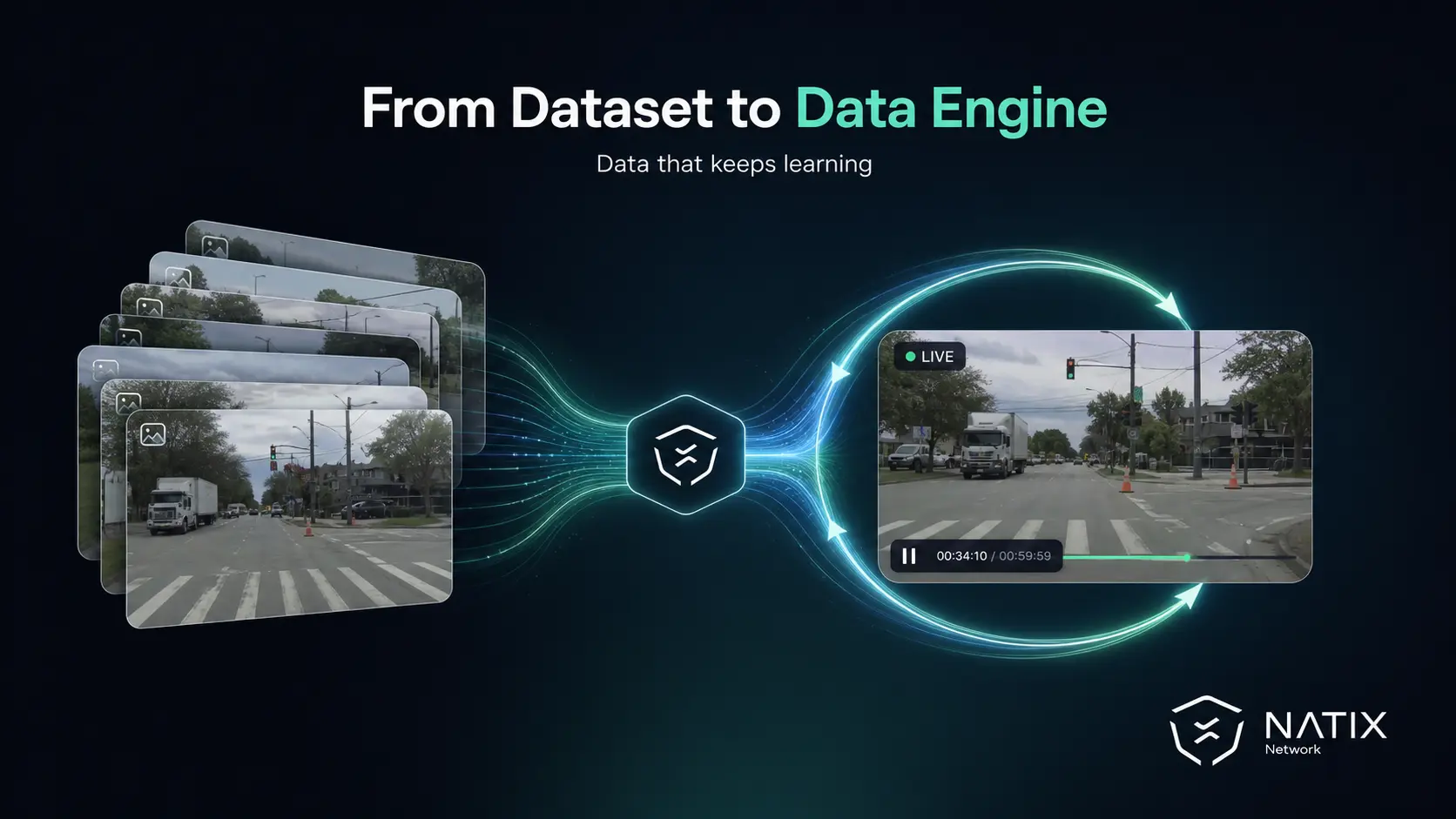
The second piece we published in August dug into a distinction that matters more every month: the difference between a dataset and a data engine. A dataset is fixed the moment it is assembled, shaped by whatever the collection team happened to capture. A data engine is a continuously running pipeline that identifies where a model is struggling and routes exactly those failure cases back into training.
Single forward-facing cameras have always created blind spots: they miss the gap a merging car is targeting, the truck approaching from the side, the object occluded by a leading vehicle. Multi-camera capture closes that gap by letting a model observe how situations develop across every angle at once. Combine that with a live, continuously updating pipeline, and you get something a static benchmark can never be: a system that keeps learning as the real world keeps producing new situations. This is the argument underpinning our work with Valeo on one of the largest open-source multi-camera World Foundation Models, and it is worth reading in full.
Quiet months are not empty months, and August was us heads down building toward some genuinely big announcements. The Physical AI space is only getting more crowded, and we intend to make sure NATIX's position in it is impossible to ignore. Expect the pace to pick back up significantly in the months ahead. You will not want to miss what's coming.
As always, make sure to follow our Twitter @NATIXNetwork to stay up-to-date with our announcements and releases.


