

NATIXIANs, July had that classic summer rhythm: the pace outside slows down, but underneath it, the real work never stops. While a lot of the DePIN space took its foot off the gas for a few weeks, we used the quiet to push out some of our most substantial data and research contributions yet, the kind that move Physical AI forward instead of just making noise about it. Let's take a look at what the month brought.
The NATIX Network doesn't take a summer break, even when the headlines do. We've now crossed over 190K hours of multi-camera data, a number that keeps compounding month after month and keeps reinforcing why NATIX sits at the center of the real-world data question for Physical AI. Every one of those hours is exactly the kind of messy, diverse, real-world driving context that world models and autonomous systems actually need to learn from, and July gave us plenty of proof that the scale keeps translating into real research impact.
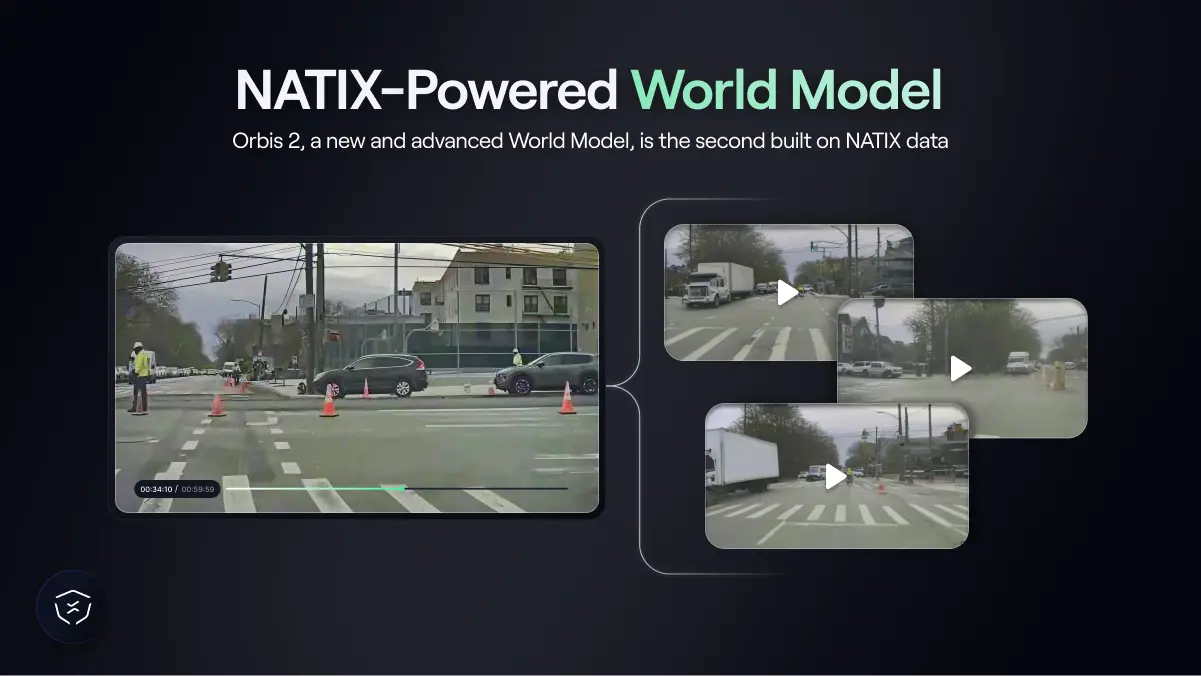
World models are quickly becoming one of the most important research directions in Physical AI, and July gave us another sign of how central NATIX data has become to that story. Researchers at the University of Freiburg, a core member of the German AI consortium nxtAIM, released Orbis 2, the first hierarchical driving world model trained on thousands of hours of real-world driving footage. NATIX wasn't just a contributor here: we provided the largest single share of the training data, over 2,000 hours of driving video, more than 40% of the entire training mix, ahead of datasets like NVIDIA PhysicalAI-AV, OpenDV, and BDD100K.
Orbis 2 splits the hard problem of predicting how a driving scene evolves into two levels: one that reasons about the bigger picture (is traffic building up, is the road curving, is an intersection coming), and one that fills in the visual details underneath. The result held up remarkably well even when tested on unseen Waymo data, a strong signal that NATIX's geographic and behavioral diversity is exactly what these models need to generalize. This is now the second World Foundation Model built on NATIX data, following our announcement with Valeo, and it's becoming clearer every month that NATIX data is turning into a benchmark for world model teams everywhere. Read the full Orbis 2 announcement for the details on how the training data was structured.
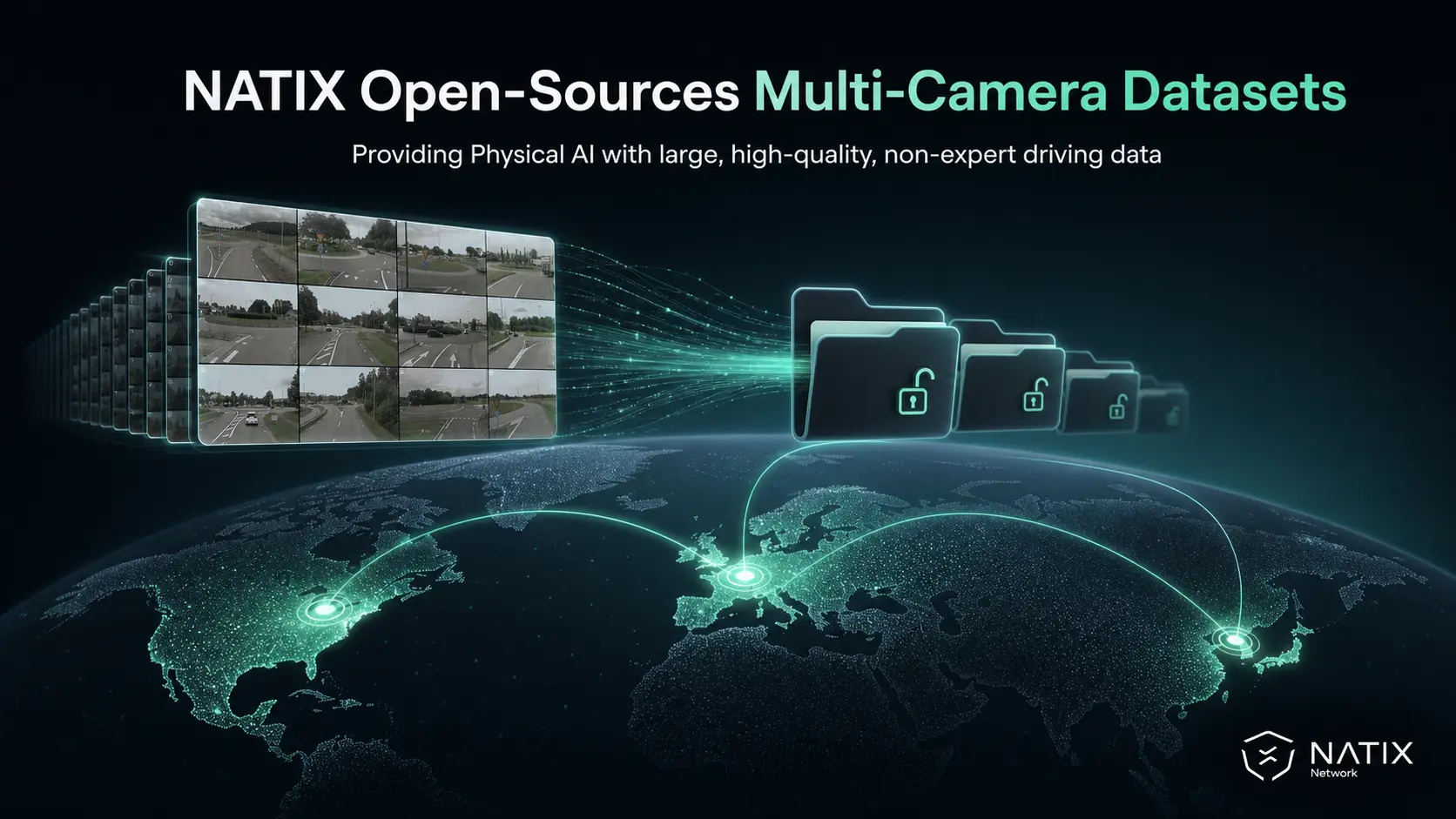
Most of the largest, most diverse driving datasets in the world stay locked behind the walls of the companies that collected them. Researchers are usually left choosing between datasets that are large but narrow (front-facing video only) or rich in sensor coverage but small and geographically limited. In July, we decided to change that.
We open-sourced two real-world driving datasets on Hugging Face: the NATIX Multi-Camera Driving Dataset and the NATIX Edge Case Driving Dataset. Together, they bring multi-camera footage, GPS/GNSS telemetry, camera calibration, trip-level metadata, and curated long-tail scenarios, all collected through our decentralized camera network rather than a purpose-built fleet. That means the data reflects how thousands of everyday, non-expert drivers actually drive, across different countries, road types, weather conditions, and vehicles, not just the routes a controlled fleet was sent out to cover.
The first release includes 100 hours of calibrated multi-camera video and 86 curated edge case events, and we're already planning to expand those to 2,000+ hours and 1,000+ events, respectively. If you're a researcher or open-source team who wants deeper access, we're happy to talk: dataset@natix.io. Read the full dataset announcement for the complete breakdown of both releases.
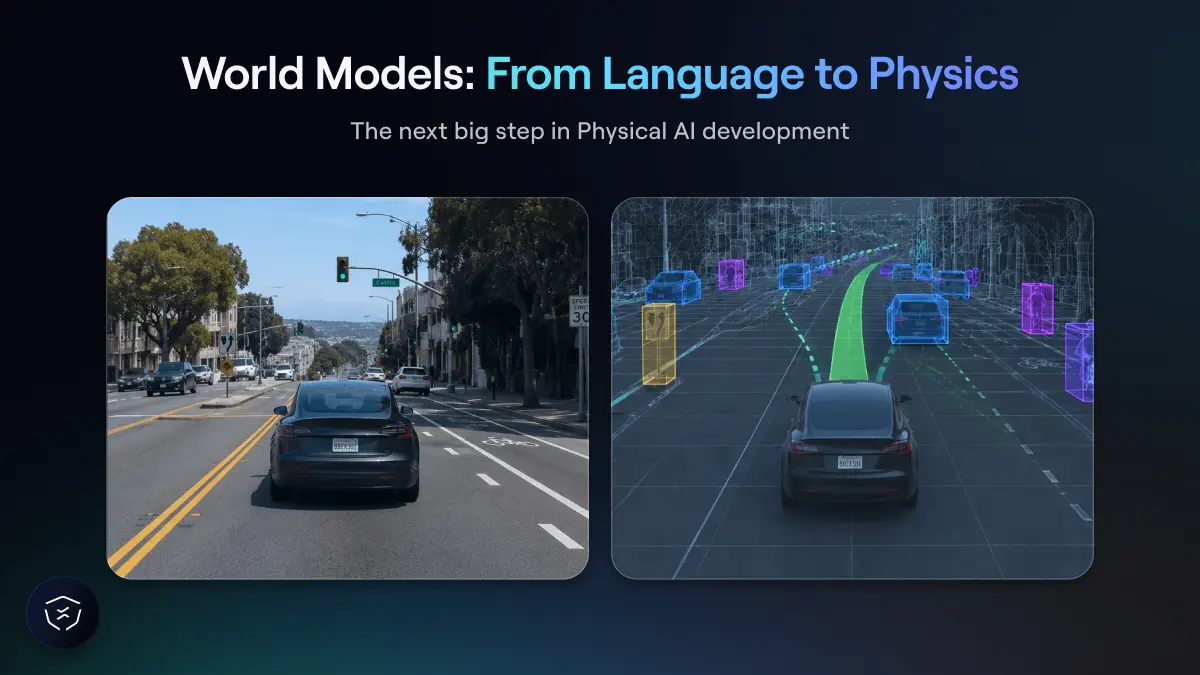
Alongside the Orbis 2 news, our co-founder and CEO Alireza Ghods published a piece breaking down why world models are suddenly getting so much attention across the AI industry, and why some of the field's most respected researchers are leaving established institutions to build companies around the idea. The piece lays out, in plain terms, what a world model actually is (something that predicts what happens next in a scene, rather than just recognizing what's already there), why traditional rule-based simulators can't keep up with the messiness of the real world, and why the data problem underneath all of it is exactly the problem NATIX was built to solve. For more background on where the field stands today, see our review of the World Foundational Model landscape.
Ali sat down for an AMA to go deeper on the Orbis 2 announcement, unpacking what the partnership means for NATIX, why hierarchical world models are such a meaningful step for driving research, and where we see this heading next for Physical AI. You can watch the full AMA here.
Summer months tend to be a little slower by nature, and July was no exception, but that doesn't mean the pipeline is empty. We have more announcements in the works, though they might not land next month. What we can say is that the demand for real-world, multi-camera Physical AI data keeps growing, and NATIX keeps being the network that supplies it.
As always, make sure to follow our Twitter @NATIXNetwork to stay up-to-date with our announcements and releases.


